So, who cares if you exercise?
Ro Body patients lost about the same amount of weight, no matter how much they sweat.

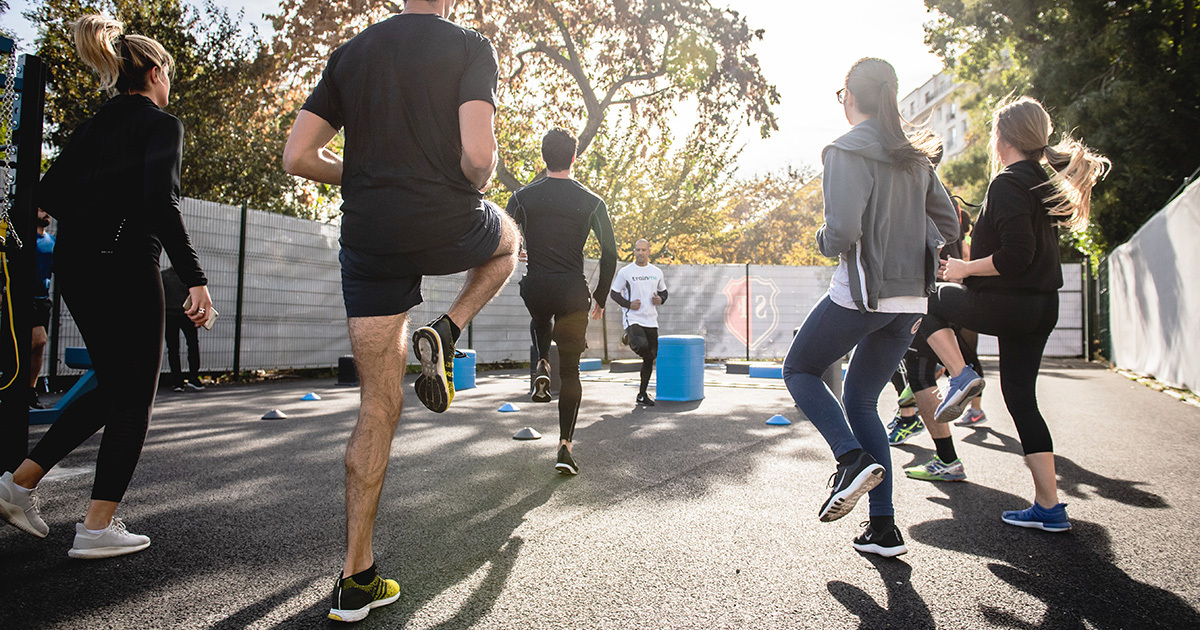
Here’s something you’re not supposed to say out loud: In the first few months on a GLP-1, how much you exercise isn’t associated with how much weight you lose.
As a society and an industry, we fixate on exercise and require it in trials because it makes a new kind of medicine fit the story we already believe about weight loss: that you have to earn it. But does that story hold up once you’re on a GLP-1?
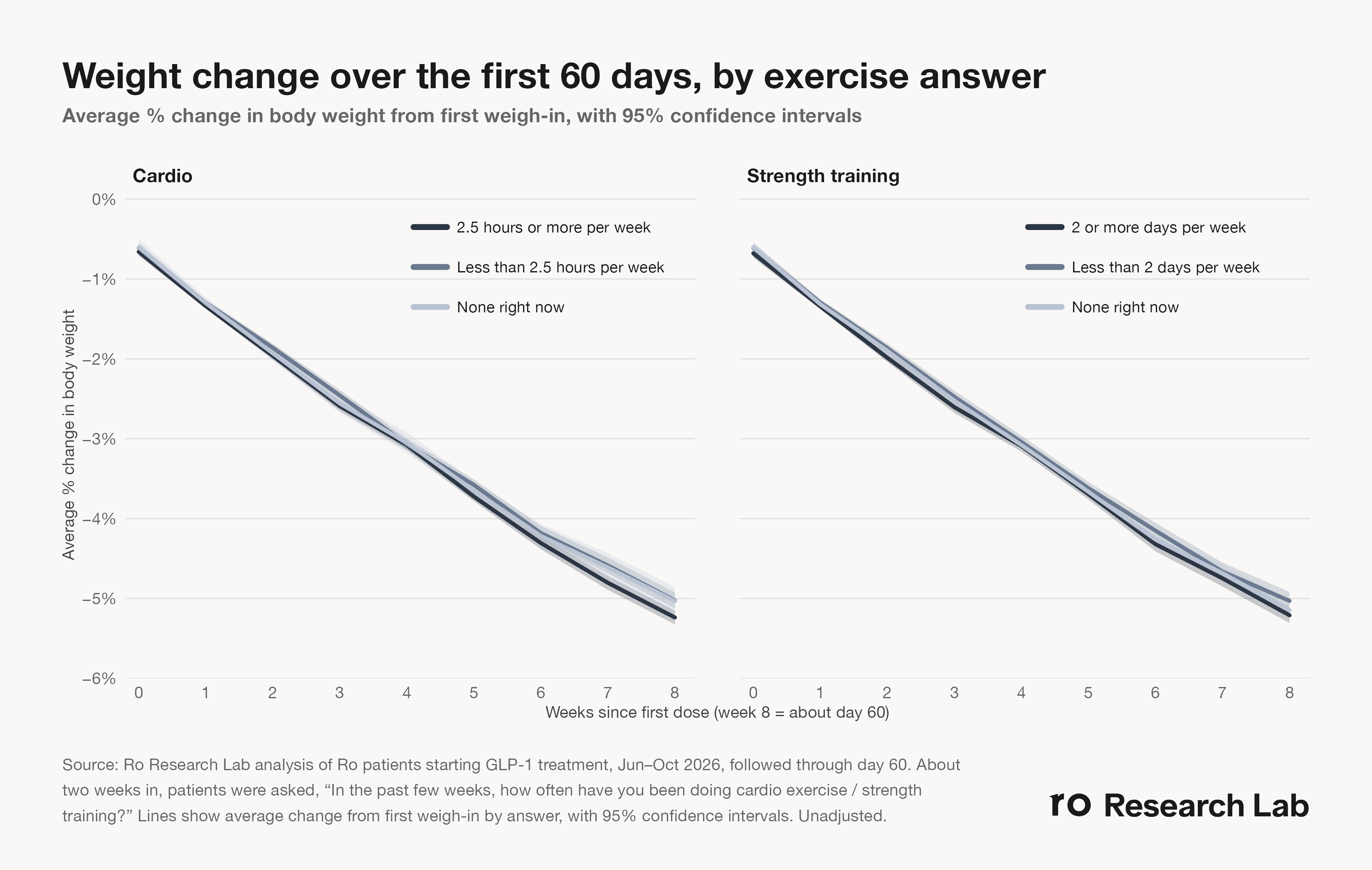
About two weeks into treatment, we asked Ro Body patients how much they had been exercising since they started taking a GLP-1 and then tracked their weight. As you can see from the chart below, the amount of exercise didn’t seem to make much of a difference. Those who reported no cardio lost 5.03% of their body weight compared with 5.24% among those reporting at least 2.5 hours per week of cardio — a difference of just 0.21 percentage points.
The historic virtue of suffering
For all recorded history, people have been tackling the challenge of living well and living longer. The ancient Romans took a spa day, Medieval Europeans ate ground-up mummies, Victorians clambered inside whale carcasses. To be human is to throw health fads at the wall and see what sticks.
In modern times, much of the focus of our desire for longevity is on weight loss. Size matters, and the roiling skirmish over the best methods of losing weight has been waged for decades. Both culturally and medically, we’ve landed on very concrete ideas of the “right” and “wrong” ways to lose weight. The right one makes you pious, virtuous, and worth exalting: a hard worker to be celebrated! The wrong one makes you not only lazy, but, in the eyes of the particularly zealous among us, also…immoral.
The right way? Restrict your calories (cake is for the wicked), and work out so hard you nearly pass out in front of your Barry’s instructor. She could have had an incredible career as a Navy SEAL.
New drug, same old script
We’re pretty married to the idea of exercise for weight loss as a society: see here, here, here. The science is less romantic. Results from diet and exercise alone are modest, and they’re extremely hard to sustain.
But it’s not for lack of trying. The share of Americans actively trying to lose weight rose from about a third to over 40% over two decades, even as obesity rates climbed. And American gym membership just hit a record high of 81 million.
We see this in our own data: 94% of Ro patients seeking weight management medication say they’ve already tried diet or exercise, often many times. Plus, nearly half of our patients already meet the weekly cardio guideline a couple of weeks into treatment.
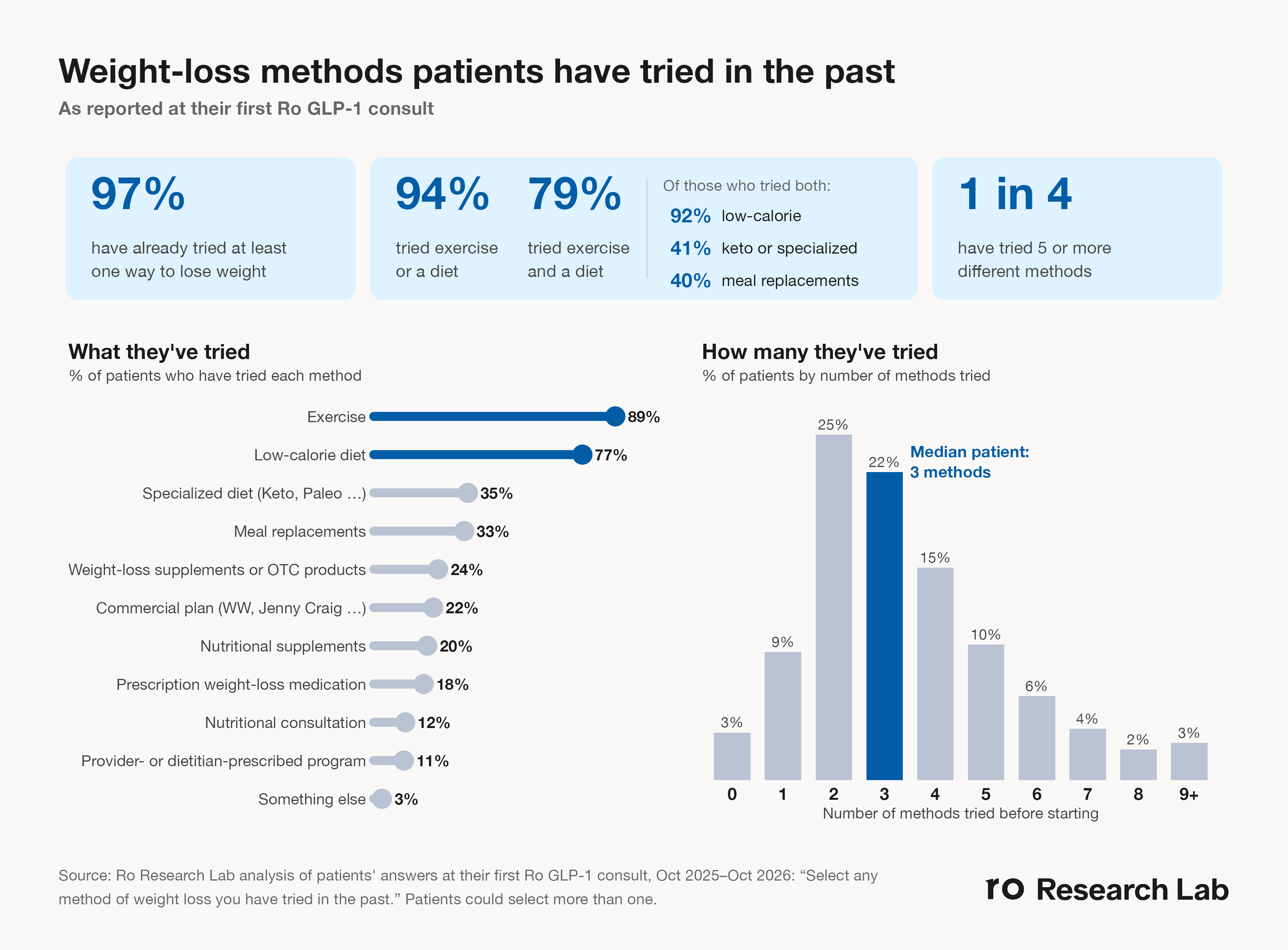
Enter GLP-1s: In 2021, we were gifted a non-surgical weight loss treatment that is effective and safe for most people. What happened next was predictable. The old talk track persisted, and insurance companies scrambled to do what they do best: delay, make difficult, and deny. The guardrails went up, with many insurers requiring proof of prior lifestyle interventions before they’ll cover a GLP-1 (as if patients hadn’t already tried that).
The sweat science
Let’s start with the clinical trials. To be clear, no randomized trial has directly compared current-generation GLP-1 treatments with and without lifestyle changes. But the STEP 3 trial of semaglutide, published in 2021 by Novo Nordisk, gave us good reason to question just how much additional weight loss intensive lifestyle interventions can actually provide for patients taking a newer GLP-1.
STEP 3 tried to push weight loss further than earlier trials like STEP 1 by piling on extra diet and exercise. Participants received 30 counseling sessions, each lasting 20–45 minutes. For the first eight weeks, they ate a strict 1,000–1,200 calories per day of shakes, bars, and prepackaged meals. Oh, and they had to work up to 200 minutes of exercise a week. Not exactly low effort.
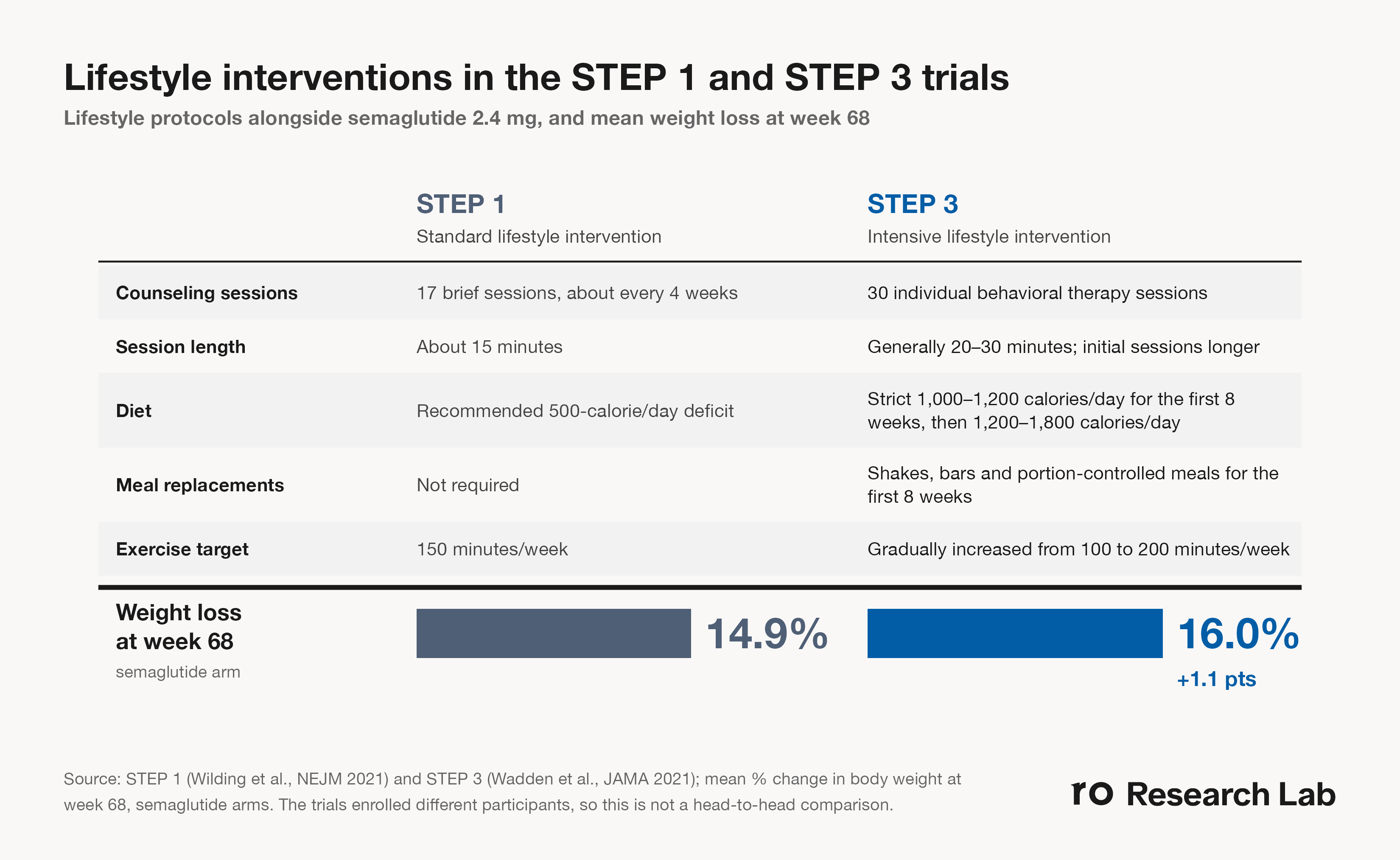
How were participants rewarded for going on a liquid diet workout bender? With only one additional percentage point of weight lost, or approximately two additional pounds (over the course of an entire year, no less).
Of course, STEP 1 and STEP 3 weren’t head-to-head trials, so we can’t make a direct comparison. But the results pose a question: Does all that extra effort lead to more weight loss?
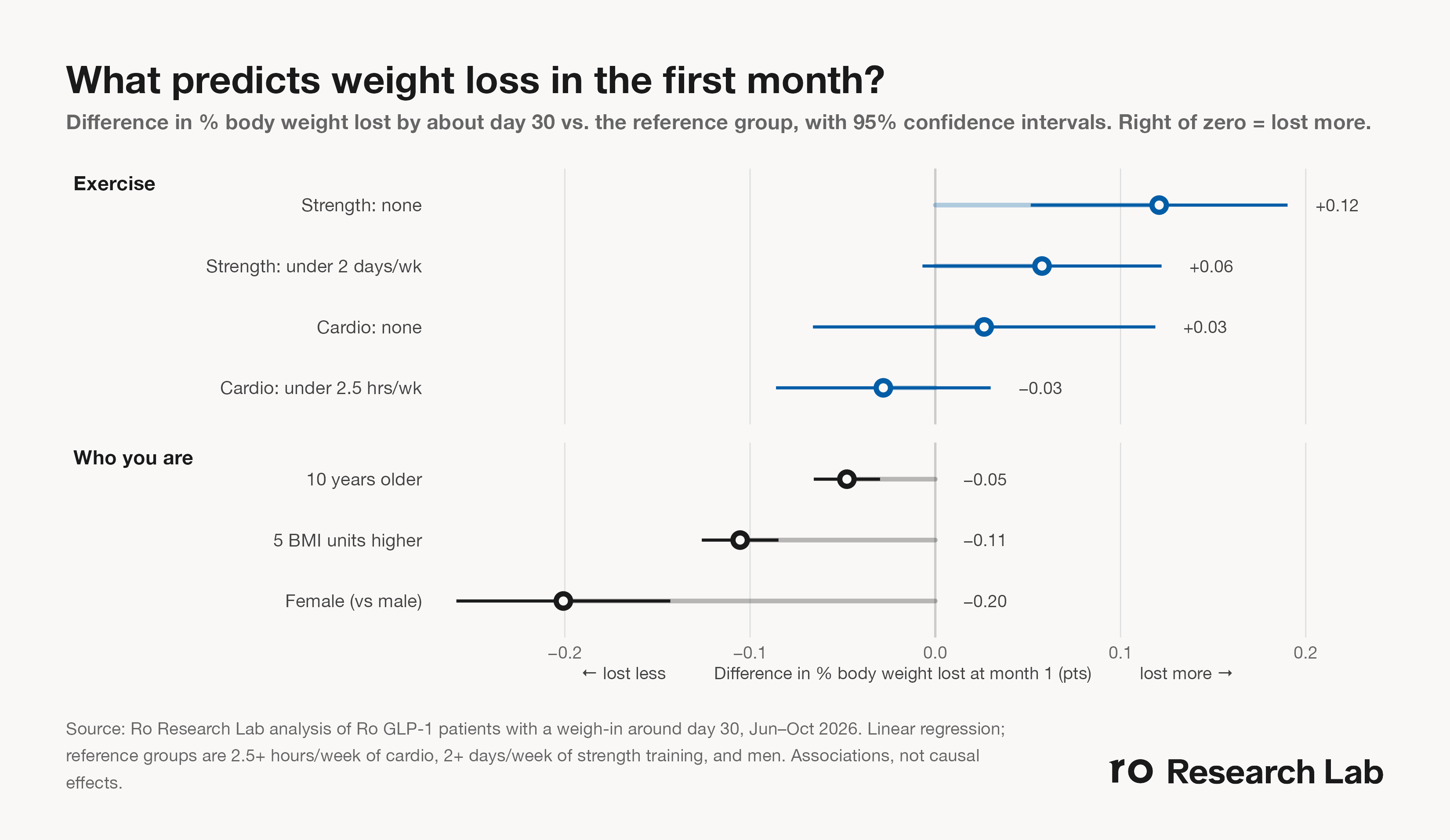
We also dug into Ro patient data. A few weeks into treatment, we ask patients how often they’ve been doing cardio and strength training, then track their weight loss. As shown above, how much patients exercise doesn’t seem to change how much weight they lose — at least early on.
Going deeper, we assessed weight loss at the first month of treatment while controlling for other factors such as age, starting body mass index (BMI), and sex. The results still held: Cardio was not significantly associated with early weight loss, while more frequent strength training was associated with less weight loss (potentially reflecting greater preservation of muscle mass, which is a good thing).
Exercise still wins, but in ways beyond the scale
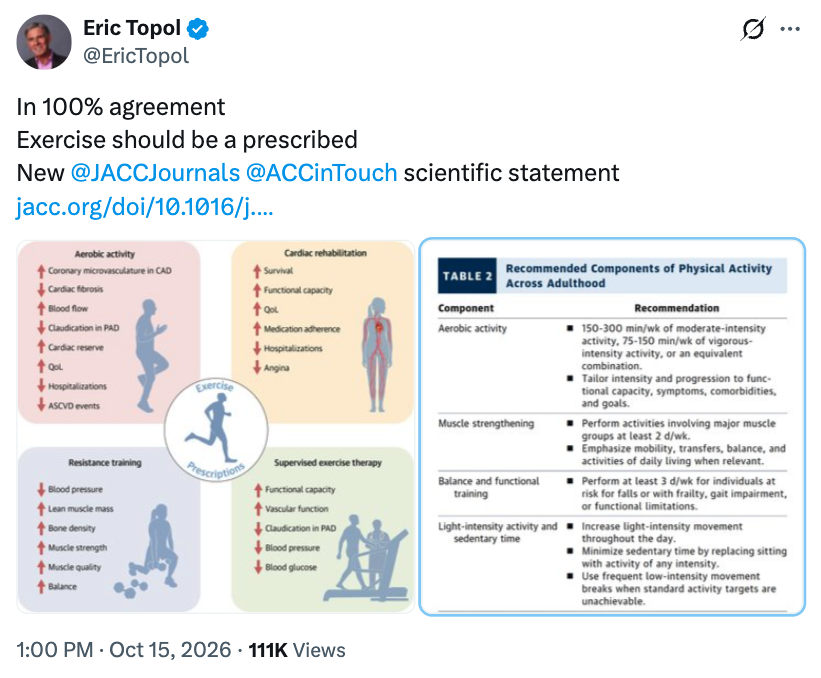
Now, what’s wrong with telling people to exercise? We know that exercise is one of the best things anyone can do for themselves and their health, and we highly recommend it. The reasons for it are numerous; just take it from Eric Topol (and The Journal of the American College of Cardiology, or JACC).
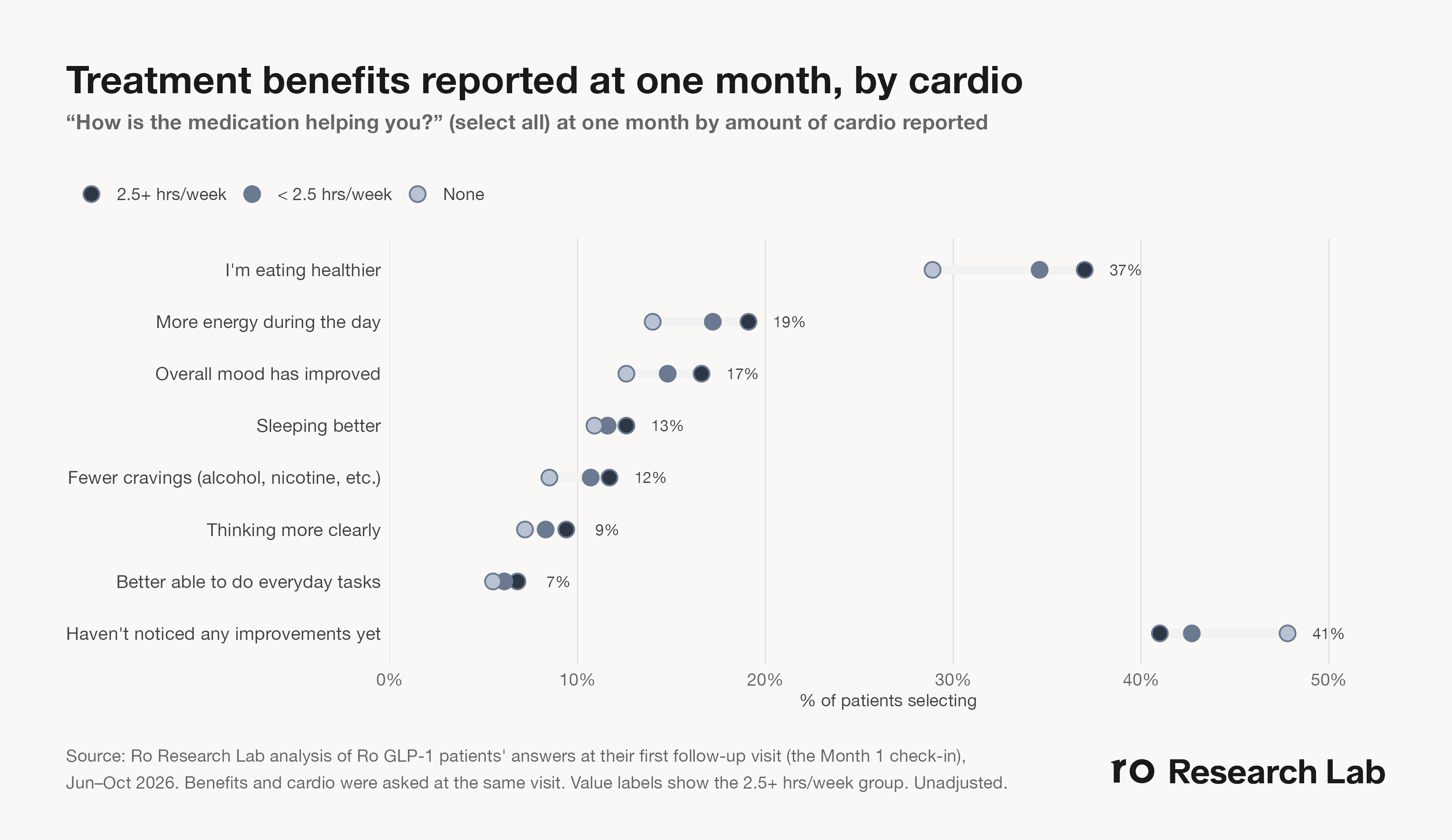
Research clearly shows — and our data suggests — that exercise is associated with other benefits aside from weight loss. Ro patients who reported engaging in more exercise early on in their GLP-1 treatment were also more likely to report more energy, improved mood, better sleep, and fewer cravings at higher rates at month one:
Our patients who are exercising are improving their everyday quality of life and long-term health outcomes. If Eric Topol’s tweet didn’t convince you, there’s plenty of published data on how exercise is beneficial for:
Research also suggests that you don’t need to adopt a high-intensity routine to reap the rewards. For example, even brief, sporadic bouts of physical activity have been associated with a reduced risk of all-cause mortality. Increasing your daily step count is associated with a lower risk of numerous chronic diseases, including diabetes and heart failure.
This is ultimately the reason to pursue exercise — not as a punishing means to move the scale.
Exercise is incredible for you. Do it for your heart, your mood, your energy. Just don’t do it because someone told you it’s the toll you must pay to lose weight. That talk track was outdated the day GLP-1s arrived, and patients (and those on the sidelines considering a GLP-1) are the ones paying for it.
So who cares if you exercise? We do, but we think you should sweat for yourself, not for the scale.
Methodology
To assess the relationship between exercise and weight loss, we examined patients’ self-reported strength training and cardio activity over the preceding few weeks, collected at their first follow-up visit (approximately two weeks after starting treatment at Ro). Exercise was categorized as ≥2.5 hours/week, <2.5 hours/week, or none. We compared average weekly weight change across exercise categories descriptively through approximately month one (Chart 1), then used linear regression to assess the association between exercise and weight loss around month two, adjusting for baseline BMI, age, and biological sex (Chart 2).
We also examined responses to a select-all-that-apply question, “How is the treatment helping you?”, collected at the same follow-up visit, and compared reported improvements across cardio activity categories (Chart 3).
This analysis has some limitations. Exercise was assessed at a single time point, and patients’ activity levels may have changed during follow-up. Additionally, these observational analyses identify associations rather than causal relationships, and the findings may be influenced by unmeasured confounding factors.
References
- 1.American Academy of Procedural Medicine. (2026). What insurance plans cover weight loss medication in 2026? Retrieved from https://aaopm.com/blog/insurance-cover-weight-loss-medication/
- 2.Bardolf, D. (2026). 75 Hard fitness challenge draws expert warnings as toned-down versions gain traction. Fox News. Retrieved from https://www.foxnews.com/health/75-hard-challenge-promises-weight-loss-experts-warn-may-too-intense
- 3.Cai, Y., Ma, T., Sirard, J., Xie, Y. J., Yang, Q., Lee, C. D., Wang, X., Liang, X., Li, Y., Lei, J., & Pang, M. Y. (2026). Data from the UK Biobank demonstrates that increased brief, sporadic moderate-to-vigorous physical activity reduces mortality. Communications Medicine, 6(1), 306. doi:10.1038/s43856-026-01421-z. Retrieved from https://pmc.ncbi.nlm.nih.gov/articles/PMC13212749/
- 4.Curioni, C. C., & Lourenço, P. M. (2005). Long-term weight loss after diet and exercise: A systematic review. International Journal of Obesity, 29, 1168–1174. doi:10.1038/sj.ijo.0803015. Retrieved from https://www.nature.com/articles/0803015
- 5.Garcia, L., Pearce, M., Abbas, A., Mok, A., Strain, T., Ali, S., Crippa, A., Dempsey, P. C., Golubic, R., Kelly, P., Laird, Y., McNamara, E., Moore, S., de Sa, T. H., Smith, A. D., Wijndaele, K., Woodcock, J., & Brage, S. (2023). Non-occupational physical activity and risk of cardiovascular disease, cancer and mortality outcomes: A dose–response meta-analysis of large prospective studies. British Journal of Sports Medicine, 57(15), 979–989. doi:10.1136/bjsports-2022-105669. Retrieved from https://pmc.ncbi.nlm.nih.gov/articles/PMC10423495/
- 6.Han, L., You, D., Zeng, F., Feng, X., Astell-Burt, T., Duan, S., & Qi, L. (2019). Trends in self-perceived weight status, weight loss attempts, and weight loss strategies among adults in the United States, 1999–2016. JAMA Network Open, 2(11), e1915219. doi:10.1001/jamanetworkopen.2019.15219. Retrieved from https://jamanetwork.com/journals/jamanetworkopen/fullarticle/2755311
- 7.Health & Fitness Association. (2026). 81 million Americans were members of a fitness facility in 2025, new HFA report finds. Retrieved from https://www.healthandfitness.org/81-million-americans-were-members-of-a-fitness-facility-in-2025-new-hfa-report-finds/
- 8.Holcombe, M. (2025). Remember ‘The Biggest Loser’? CNN. Retrieved from https://www.cnn.com/2025/08/15/health/biggest-loser-documentary-fit-for-tv-wellness
- 9.Koemel, N. A., Ahmadi, M. N., Biswas, R. K., Thøgersen-Ntoumani, C., Teixeira-Pinto, A., Chow, C. K., Harezlak, J., & Stamatakis, E. (2026). Vigorous intermittent lifestyle physical activity (VILPA) and mortality risk among US adults: A wearables-based national cohort study. The International Journal of Behavioral Nutrition and Physical Activity, 23, Article 17. doi:10.1186/s12966-026-01876-2. Retrieved from https://link.springer.com/article/10.1186/s12966-026-01876-2
- 10.Myers, J., Beckie, T. M., Chastin, S., Fleg, J. L., Kitzman, D. W., Thompson, P. D., & Wasfy, M. M. (2026). Exercise prescriptions for cardiovascular health in adults: 2026 ACC scientific statement: A report of the American College of Cardiology. Journal of the American College of Cardiology, S0735-1097(26)07722-3. Advance online publication. doi:10.1016/j.jacc.2026.09.008. Retrieved from https://www.jacc.org/doi/10.1016/j.jacc.2026.09.008
- 11.Olateju, I. V., Opaleye-Enakhimion, T., Udeogu, J. E., Asuquo, J., Olaleye, K. T., Osa, E., & Oladunjoye, A. F. (2023). A systematic review on the effectiveness of diet and exercise in the management of obesity. Diabetes & Metabolic Syndrome: Clinical Research & Reviews, 17(4), 102759. doi:10.1016/j.dsx.2023.102759. Retrieved from https://pubmed.ncbi.nlm.nih.gov/37084486/
- 12.Pahor, M., Guralnik, J. M., Ambrosius, W. T., Blair, S., Bonds, D. E., Church, T. S., Espeland, M. A., Fielding, R. A., Gill, T. M., Groessl, E. J., King, A. C., Kritchevsky, S. B., Manini, T. M., McDermott, M. M., Miller, M. E., Newman, A. B., Rejeski, W. J., Sink, K. M., & Williamson, J. D. (2014). Effect of structured physical activity on prevention of major mobility disability in older adults: The LIFE study randomized clinical trial. JAMA, 311(23), 2387–2396. doi:10.1001/jama.2014.5616. Retrieved from https://jamanetwork.com/journals/jama/fullarticle/1875328
- 13.Ruprecht, M. (2026). Young men want to get big. For some, it's becoming an obsession. KPBS Public Media. Retrieved from https://www.kpbs.org/news/health/2026/01/14/young-men-want-to-get-big-for-some-its-becoming-an-obsession
- 14.Singh, B., Olds, T., Curtis, R., Dumuid, D., Virgara, R., Watson, A., Szeto, K., O'Connor, E., Ferguson, T., Eglitis, E., Miatke, A., Simpson, C. E., & Maher, C. (2023). Effectiveness of physical activity interventions for improving depression, anxiety and distress: An overview of systematic reviews. British Journal of Sports Medicine, 57(18), 1203–1209. doi:10.1136/bjsports-2022-106195. Retrieved from https://bjsm.bmj.com/content/57/18/1203
- 15.Wadden, T. A., Bailey, T. S., Billings, L. K., Davies, M., Frias, J. P., Koroleva, A., Lingvay, I., O'Neil, P. M., Rubino, D. M., Skovgaard, D., Wallenstein, S. O. R., & Garvey, W. T. (2021). Effect of subcutaneous semaglutide vs placebo as an adjunct to intensive behavioral therapy on body weight in adults with overweight or obesity: The STEP 3 randomized clinical trial. JAMA, 325(14), 1403–1413. doi:10.1001/jama.2021.1831. Retrieved from https://jamanetwork.com/journals/jama/fullarticle/2777025
- 16.Wilding, J. P. H., Batterham, R. L., Calanna, S., Davies, M., Van Gaal, L. F., Lingvay, I., McGowan, B. M., Rosenstock, J., Tran, M. T. D., Wadden, T. A., Wharton, S., Yokote, K., Zeuthen, N., & Kushner, R. F. (2021). Once-weekly semaglutide in adults with overweight or obesity. The New England Journal of Medicine, 384(11), 989–1002. doi:10.1056/NEJMoa2032183. Retrieved from https://www.nejm.org/doi/full/10.1056/NEJMoa2032183
- 17.Zheng, N. S., Huang, S., Annis, J., Master, H., Full, K. M., & Brittain, E. L. (2026). Daily steps offset risks of sedentary behavior in the All of Us research program. Nature Communications, 17, 4936. doi:10.1038/s41467-026-71652-0. Retrieved from https://www.nature.com/articles/s41467-026-71652-0